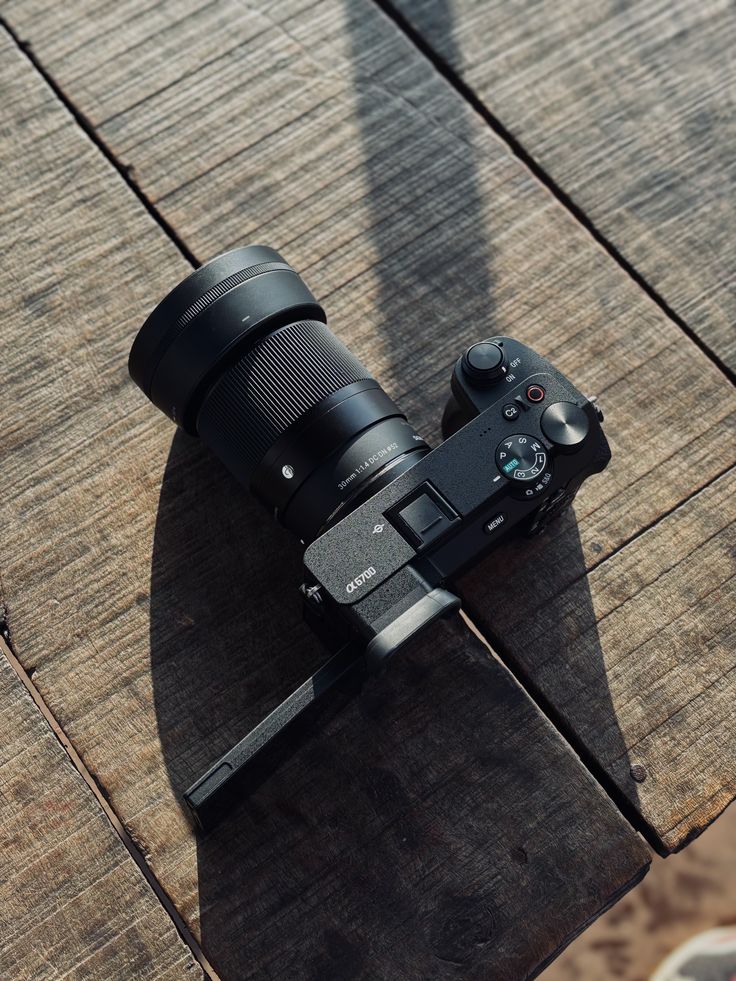
When I bought the Sony A6700 and paired it with the Sigma 16mm F1.4, I thought of them the way I think about most new equipment, as tools I was still getting to know. I read the specifications, tested the autofocus in low light, checked how the files held up when I pushed them in an edit. It was a practical relationship, built on performance rather than familiarity. I liked the combination immediately, but liking something and knowing it are two different things, and at the time I didn't know it yet.
Two years is a long time to carry one setup. It has been in my bag on shoots I planned for weeks and on ordinary days when I only meant to step outside for ten minutes. It has travelled with me, sat through long waits for light that never quite arrived, and been pulled out for moments that gave me no time to think. Somewhere in all of that repetition, the equipment stopped being equipment. I stopped noticing the weight of it, stopped consciously deciding to reach for it. It just became the thing in my hand when a photograph presented itself.
The Sigma 16mm has become the more familiar of the two, mostly because of how it sees. The field of view lets me stand close enough to a subject that the photograph still feels intimate, while keeping enough of the surrounding world in frame to give that subject context: a room, a street, the weather, the people just out of focus at the edges. I don't think about that framing choice anymore. My feet already know how close is close enough before I raise the camera.
The A6700 itself has settled into a similar role, dependable in a way that's almost unremarkable now, which I mean as a compliment. I'm not thinking about menus or settings mid shoot. I know where everything is without looking. It has become an everyday creative tool rather than a piece of technology I have to manage, and that shift is quieter than it sounds, but it changes how present I can be with what's actually in front of me.
There's a real difference between owning a piece of gear and knowing it. A good camera can hand you possibilities: sharper files, faster autofocus, more dynamic range. But familiarity gives you something a spec sheet never will: instinct. After two years, I know how this lens renders light before I've even raised the camera to my eye. I know how close I need to get, what will and won't fit inside the frame, when it's worth standing still for another few minutes because the light is about to do something worth waiting for, and, just as importantly, when to stop adjusting settings and simply make the photograph.
The longer I spend doing this, the less interested I am in chasing the perfect setup, and the more interested I become in actually knowing the one I already have. Photography conversations are full of comparisons: sensor size, sharpness charts, which lens resolves more detail than which. Eventually those questions matter less than a simpler one: can this combination help me see and make the photograph I already have in my head? For two years, this one has kept answering yes.
There will always be a newer camera. There will always be a lens that promises something sharper, faster, better in the dark. I don't doubt that. But there's a different kind of value in a setup that has been with you long enough to stop feeling like gear, one that has quietly become part of the process instead of a decision you make before it. That's what these two years have given me. Not the best camera. Just one I know well enough to stop thinking about, so I can think about the photograph instead.